
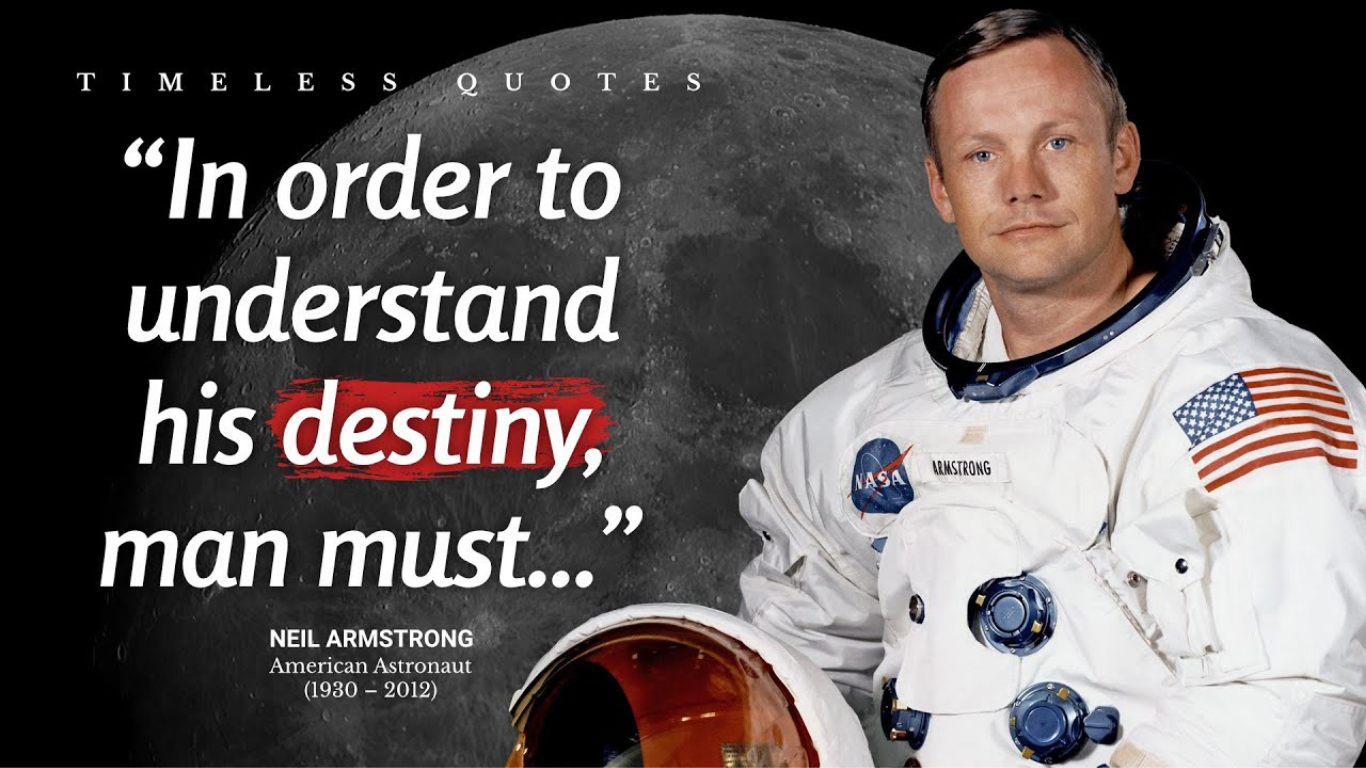

Neil Armstrong etched his name into history on July 20, 1969, as the first person to walk on the Moon. Yet his enduring legacy extends far beyond that single step. Neil Armstrong quotes capture the awe of exploration, the humility of discovery, and the boundless potential of humanity. These words, spoken during one of the most watched events in human history, continue to motivate dreamers, scientists, and adventurers worldwide. From reflections on courage to observations of Earth’s fragility, Neil Armstrong quotes reveal a man who balanced technical precision with poetic insight. This article delves into his most memorable statements, exploring their context and lasting relevance for anyone seeking inspiration from one of history’s greatest pioneers.
The Iconic Moon Landing Quote and Its Global Impact
One of the most famous Neil Armstrong quotes remains etched in collective memory: “That’s one small step for a man, one giant leap for mankind.” Spoken as he descended the lunar module’s ladder, the words instantly symbolized humanity’s triumph over the unknown. Armstrong later clarified he intended the article “a” before “man,” though radio static obscured it for millions listening live. This subtle distinction emphasized personal action versus universal progress. The phrase unified people across nations, transcending political divides during the Cold War era. Even today, it reminds us that individual efforts can spark monumental change, encouraging readers to view personal challenges as steps toward greater achievements.
The Historic Landing Announcement That Confirmed Success
As the Eagle touched down on the lunar surface, Armstrong radioed back: “Houston, Tranquility Base here. The Eagle has landed.” This calm, professional Neil Armstrong quote marked a flawless conclusion to a high-stakes descent filled with uncertainty. Millions held their breath as the module’s fuel dwindled. His understated delivery highlighted the teamwork behind the mission rather than personal glory. The message reassured ground control and the world that humanity had safely reached another world. It underscores the value of composure under pressure, a lesson applicable to everyday high-stakes situations where clear communication turns potential failure into success.
Armstrong’s Philosophy on Human Challenges and Exploration
Armstrong believed exploration was innate to humanity. He stated, “I think we’re going to the moon because it’s in the nature of the human being to face challenges. It’s by the nature of his deep inner soul.” This Neil Armstrong quote frames space travel not as optional but as an essential expression of our spirit. He drew parallels to salmon swimming upstream, suggesting curiosity drives us forward despite risks. Such wisdom inspires modern innovators tackling climate change or medical breakthroughs. It encourages embracing discomfort as the pathway to growth, reminding us that progress stems from our fundamental drive to explore beyond known boundaries.
A Humbling View of Earth from Space
From lunar orbit, Armstrong shared a profound perspective: “It suddenly struck me that that tiny pea, pretty and blue, was the Earth. I put up my thumb and shut one eye, and my thumb blotted out the planet Earth. I didn’t feel like a giant. I felt very, very small.” This Neil Armstrong quote captures the overwhelming sense of humility astronauts experience when viewing our fragile home planet. It shifts focus from conquest to interconnectedness, highlighting Earth’s vulnerability amid vast space. The reflection promotes environmental awareness and global unity. Readers often find it fosters gratitude and a renewed commitment to preserving our shared world for future generations.
Valuing Time and Purposeful Living
Armstrong offered practical wisdom about life’s brevity: “I believe that every human has a finite number of heartbeats. I don’t intend to waste any of mine.” This Neil Armstrong quote, shared in interviews, rejected unnecessary distractions like excessive exercise in favor of meaningful pursuits. It reflects his disciplined mindset shaped by test piloting and spaceflight. The statement urges prioritization of passions and contributions over trivial routines. In a fast-paced world, it serves as a powerful reminder to invest time in what truly matters, inspiring professionals and students alike to pursue purposeful goals with urgency and focus.
Mystery, Wonder, and the Drive for Knowledge
Curiosity defined Armstrong’s worldview. He noted, “Mystery creates wonder and wonder is the basis of man’s desire to understand.” This Neil Armstrong quote links the unknown to scientific progress and personal fulfillment. It explains why humans venture into space, oceans, and uncharted ideas. Rather than fearing mystery, he celebrated it as fuel for discovery. The insight resonates with educators and lifelong learners, encouraging questions over complacency. It positions wonder as an essential human trait, one that propels innovation and deepens appreciation for the universe’s complexities.
Embracing Risk for Lasting Accomplishments
Armstrong acknowledged danger as inseparable from achievement: “There can be no great accomplishment without risk.” This concise Neil Armstrong quote distilled lessons from his aviation and astronaut career, where calculated dangers yielded historic rewards. He viewed risk not as recklessness but as necessary for breakthroughs. Paired with his calm demeanor during Apollo 11’s tense moments, it motivates entrepreneurs, athletes, and explorers today. The message affirms that meaningful success demands courage, reinforcing the idea that playing it safe rarely leads to extraordinary outcomes.
FAQs
What is Neil Armstrong’s most famous quote?
The most recognized is “That’s one small step for a man, one giant leap for mankind.” It perfectly captured the Apollo 11 mission’s historic significance and humanity’s shared achievement.
Why do Neil Armstrong quotes still inspire people today?
They blend humility, courage, and curiosity. These themes address universal challenges like exploration, time management, and environmental responsibility, remaining relevant across generations.
Did Neil Armstrong write his famous moon quote in advance?
Yes, he prepared the words thoughtfully. The statement reflected months of consideration about representing all humankind, though the exact delivery sparked minor debate due to transmission issues.
What do Neil Armstrong quotes reveal about his character?
They show a humble, focused, and forward-thinking individual. He emphasized teamwork, wonder, and purposeful living rather than personal fame, traits rooted in his engineering and piloting background.
How can Neil Armstrong quotes apply to everyday life?
They encourage facing challenges, valuing time, and embracing wonder. Readers use them for motivation in careers, personal growth, and pursuing ambitious goals despite obstacles.
Conclusion
Neil Armstrong quotes distill the essence of human ambition and humility into memorable phrases that continue shaping perspectives worldwide. From the triumphant first step on the Moon to reflections on Earth’s smallness and life’s finite nature, these words highlight curiosity, courage, and unity. They remind us that exploration—whether literal or personal—drives progress while grounding us in shared humanity. By revisiting these insights, we honor Armstrong’s legacy and find motivation to tackle our own frontiers. His wisdom endures as a call to dream boldly, act purposefully, and cherish the wonder that defines us all. In embracing Neil Armstrong quotes, we carry forward the spirit that propelled humanity to the Moon and beyond