
The Chrysler New Yorker stands out as a beacon of elegance and innovation in the automotive world. For decades, this remarkable vehicle captured the hearts of drivers who craved sophistication without compromising on performance. From its early days as a symbol of prestige to its later adaptations that kept pace with changing times, the Chrysler New Yorker embodied the spirit of American ingenuity. It’s no wonder that enthusiasts still celebrate it today—after all, few cars have managed to blend luxury and reliability quite like this one. As we dive into its rich history, you’ll see why the Chrysler New Yorker remains a favorite among collectors and historians alike.
The Origins of the Chrysler New Yorker
Let’s step back to the late 1930s, when the automotive landscape was buzzing with excitement. The Chrysler New Yorker first emerged in 1938, not as a standalone model but as a special trim level for the Chrysler Imperial. Back then, it was called the “New York Special,” a name that hinted at its upscale appeal, drawing inspiration from the glamour of the Big Apple. By 1939, it officially adopted the Chrysler New Yorker badge, setting the stage for what would become one of the longest-running nameplates in American car history.
This early version wasn’t just about looks; it packed a punch under the hood with a robust straight-eight engine, displacing 298.7 cubic inches at first, later bumping up to 323.5 cubic inches. Imagine cruising down the highway in a four-door sedan or a sleek two-door coupe, surrounded by broadcloth upholstery and polished woodgrain dashboards. Prices started around $1,223, which, in those days, positioned it as a premium choice without breaking the bank. Moreover, optional two-tone paint schemes added a touch of flair, making heads turn wherever it went.
What really set the Chrysler New Yorker apart from the get-go was its focus on comfort and innovation. Features like independent front suspension and a three-speed manual transmission with overdrive made driving smoother than ever. Oh, and don’t forget the “Highlander” variant, which brought tartan seats into the mix—a nod to Scottish heritage that added a unique, cozy vibe. As World War II loomed, production paused in 1942, but the Chrysler New Yorker had already planted its flag as a luxury leader.
Early Models and Innovations
Fast-forward to the 1940s, and the Chrysler New Yorker truly came into its own. The 1940 model marked its debut as a standalone vehicle, shedding its sub-series status. With a fresh body design and Fluid Drive technology—a fluid coupling that smoothed out gear shifts—it felt like the future had arrived on four wheels. Drivers raved about the independent coil spring front suspension and the beam rear axle, which handled bumps like a dream.
By 1941, the design evolved further, featuring wider, lower bodies with more glass area for better visibility. Transitional phrases aside, this era introduced exciting options like the Vacamatic overdrive, which boosted fuel efficiency on long trips. Hey, in a time when gas was cheap but roads were long, that mattered! Production numbers climbed, with over 12,000 units built in 1942 before the war halted everything. During those tough years, Chrysler shifted focus to military production, but the Chrysler New Yorker waited patiently in the wings, ready to roar back.
When it did return in 1946, the post-war models picked up right where they left off. The C-39 series offered a mix of body styles: sedans, coupes, and even convertibles on a 127.5-inch wheelbase. Powered by that trusty 323.5 cubic inch straight-eight, it delivered reliable performance. Optional Presto-Matic semi-automatic transmission made shifting effortless, and prices hovered around $2,073 for the base sedan. Competing against heavyweights like the Cadillac Series 61, the Chrysler New Yorker held its ground with style and substance.
Innovations kept coming thick and fast. In 1949, ponton three-box styling gave it a modern edge, while the introduction of the FirePower V8 in 1951 cranked horsepower up to 180. Zero to 60 in about 10 seconds? That’s impressive for the era! Plus, features like Hydraguide power steering made maneuvering this big beauty a breeze. The station wagon variant, though rare with only 251 built, showed Chrysler’s willingness to experiment. All in all, these early models laid a foundation of trust and authority that the Chrysler New Yorker would build upon for years.
Post-War Evolution of the Chrysler New Yorker
After the war, the automotive industry boomed, and the Chrysler New Yorker evolved right along with it. The 1950s brought refinements like a hardtop coupe called the Newport and safety features such as a foam-padded dashboard. By 1952, taillights got a fresh redesign, and the wheelbase shrank slightly to 125.5 inches for better handling. The DeLuxe trim level upped the ante with more power—up to 235 horsepower from the FirePower V8.
However, the real game-changer came in 1954 with the PowerFlite two-speed automatic transmission, ditching the old semi-automatic for smoother shifts. Engines ranged from 195 to 235 horsepower, depending on the trim. Body styles included sedans, hardtops, and wagons, though the long-wheelbase options faded away. This period solidified the Chrysler New Yorker’s reputation as a reliable family hauler with a luxurious twist. Sales figures reflected that optimism, as Americans embraced the open road in style.
Moving into the mid-1950s, the C-68 series of 1955 introduced Virgil Exner’s influence, drawing from the Imperial Parade Phaeton. A 126-inch wheelbase and engines up to 250 horsepower made it peppy, while the St. Regis hardtop added two-tone paint for extra panache. It’s like Chrysler was saying, “Why settle for ordinary when you can have extraordinary?” Features such as power brakes and air conditioning became more common, enhancing the overall driving experience.
The Exner Era: Forward Look Design
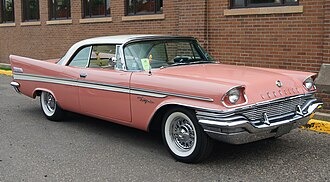
Ah, the Exner era—now that’s when things got really exciting! Virgil Exner’s “Forward Look” styling in 1956 brought bold changes to the Chrysler New Yorker. The mesh grille, towering fins, and a 354 cubic inch Hemi V8 pumping out 280 horsepower turned heads everywhere. The TorqueFlite three-speed automatic became standard, and options like the Highway Hi-Fi record player let you jam to tunes on the go.
By 1957, fins swept upward dramatically, and the Torsion-Aire suspension smoothed out rides like never before. Horsepower climbed to 325, making it a force on the highway. Sure, the 1958 recession hit sales, with only 666 convertibles produced, but innovations like cruise control kept the model ahead of the curve. The 1959 switch to a 413 cubic inch Wedge V8 maintained that power legacy, while fin designs evolved to keep the look fresh.
This era wasn’t without challenges; rust issues plagued some models, but Chrysler’s engineering prowess shone through. The Chrysler New Yorker became synonymous with forward-thinking design, proving that luxury could be adventurous too. Collectors today chase these models for their iconic style, a testament to Exner’s lasting impact.
Unibody Construction and Changing Styles
As the 1960s dawned, the Chrysler New Yorker embraced unibody construction, lightening the load while maintaining strength. The 1960 PC3-H series stuck with the 413 V8 at 350 horsepower and a 126-inch wheelbase. Shared elements with the Chrysler 300F, like the grille, added a sporty flair. Optional rear bucket seats borrowed from performance models showed versatility.
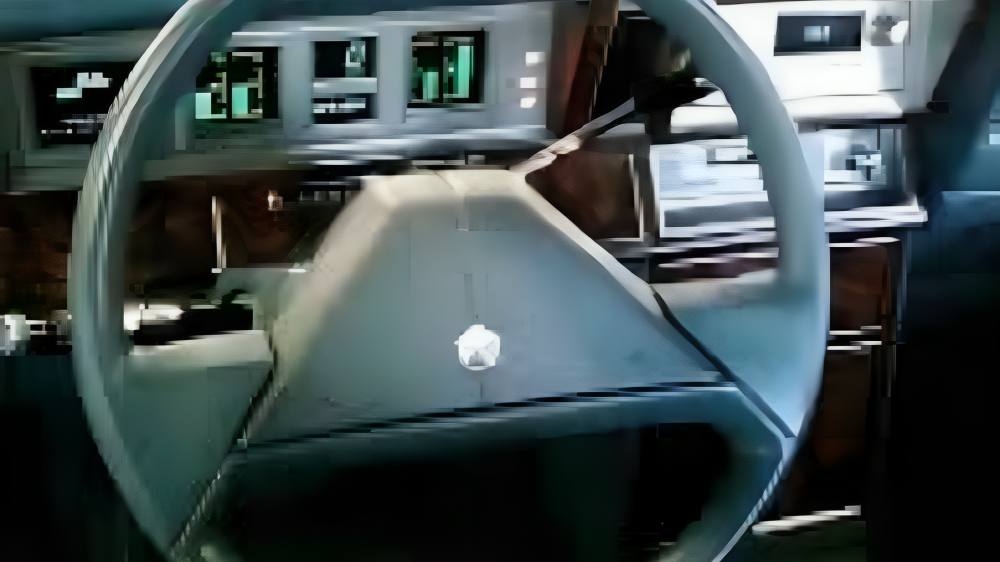
In 1961, a continental kit and slanted headlights refreshed the look. By 1962, fins disappeared entirely, opting for a cleaner, finless design on a shorter 122-inch wheelbase. The AstraDome instrumentation cluster was a cool touch, glowing like something out of science fiction. The 1963 models brought back subtle traces of the Forward Look, with a midyear Salon hardtop offering extra luxury.
Come 1964, small tailfins returned, but the overall shape grew boxier. No more convertibles, focusing instead on sedans and hardtops. This shift emphasized practicality without skimping on elegance, ensuring the Chrysler New Yorker appealed to a broad audience. It’s as if Chrysler was adapting to the times, keeping one foot in tradition while stepping toward modernity.
Slab-Side and Fuselage Periods
Entering the slab-side era in 1965, the Chrysler New Yorker adopted Elwood Engel’s clean lines on a 124-inch wheelbase. The 413 V8 delivered 340 to 360 horsepower, paired with TorqueFlite. Body styles included town sedans and wagons, with features like auto-dimming mirrors adding convenience.
The 1966 switch to a 440 cubic inch V8 upped power to 350-365 horsepower. Dropping the wagon streamlined the lineup. By 1967, below-beltline redesigns introduced fastback hardtops. The 1968 updates focused on grilles and bumpers, maintaining that fresh appeal.
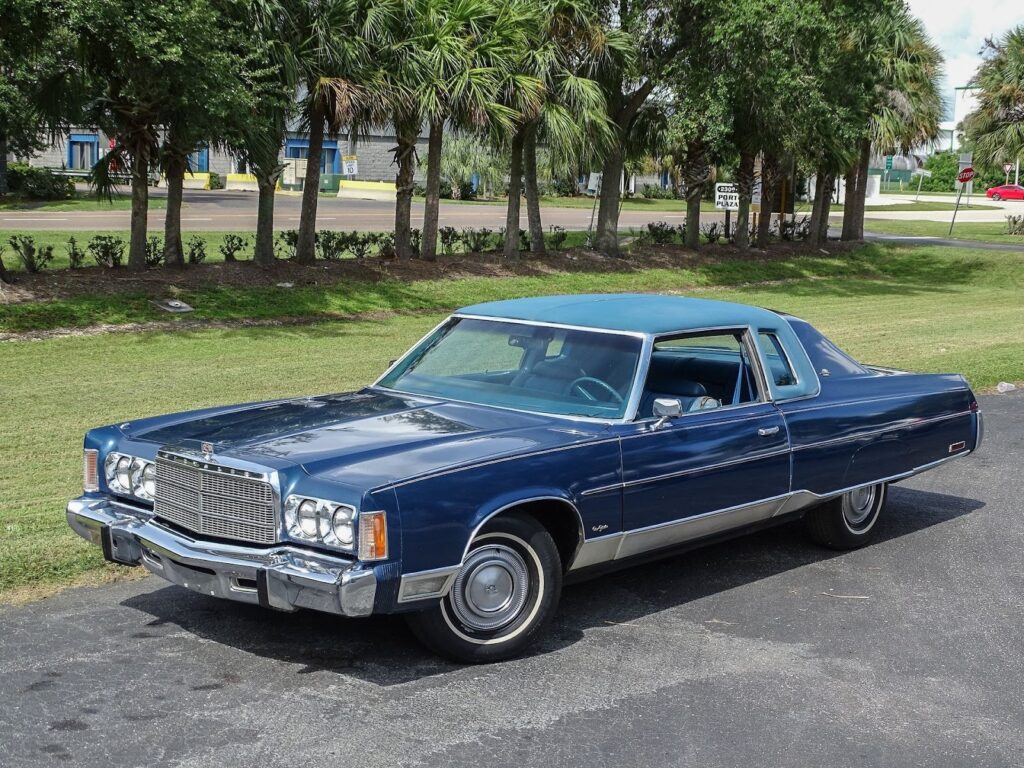
Then came the fuselage styling in 1969, with smooth, rounded sides and wraparound lights. The 440 V8 persisted, but emissions regs started tweaking outputs. The 1970s brought ventless windows and Torsion-Quiet suspension for a quieter ride. Loop bumpers in 1972 and rubber guards in 1973 met safety standards.
The 1974 models evolved the fuselage look, introducing the Brougham trim for ultimate luxury. Engines like the 440 (now 197 horsepower with lean-burn tech) balanced power and efficiency. The 1976 inherited Imperial cues, like hidden headlights, emphasizing opulence. Through 1978, the CS series offered pillarless hardtops, marking the end of an era with frameless glass—a design that screamed sophistication.
Downsizing to Front-Wheel Drive
Times change, and so did the Chrysler New Yorker. The 1979 TP series on the R-body platform downsized to a 118.5-inch wheelbase, with a 318 V8 standard. The Fifth Avenue package added plush touches, boosting sales to over 54,000 units. The 1980s brought special editions with stainless roofs.
By 1982, the M-body further shrunk to 112.7 inches, offering inline-six or V8 options. But the big shift came in 1983 with front-wheel drive on the E-body, a 103.3-inch wheelbase, and turbocharged 2.2-liter four-cylinders. Electronic Voice Alert? That was cutting-edge! Reviews praised its comfort, though some noted electronic quirks.
The 1988 C series returned hidden headlights and a 3.0-liter V6. The 1990 Salon trim exposed them for a bolder look. By 1994, the LH platform stretched to 113 inches with a 3.5-liter V6 at 214 horsepower. Shared with the LHS, it differed in trim and shifter style. Production ended in 1996 after 61,202 units, but the legacy lived on.
This downsizing era showed Chrysler’s adaptability, proving that luxury could thrive in smaller packages. Optimistically, it paved the way for efficient, modern driving without losing that premium feel.
Key Features and Specifications
To truly appreciate the Chrysler New Yorker, let’s break down some standout features across eras. Early models boasted innovative transmissions like Fluid Drive, while later ones introduced electronic aids.
Here’s a table highlighting select models’ specs:
| Model Year | Wheelbase (inches) | Engine | Horsepower | Transmission | Notable Features |
| 1940 | 128.5 | Straight-8 (323.5 cu in) | 135 | 3-speed manual with overdrive | Fluid Drive, independent suspension |
| 1955 | 126 | V8 (331 cu in) | 250-300 | PowerFlite automatic | Forward Look styling, power steering |
| 1965 | 124 | V8 (413 cu in) | 340-360 | TorqueFlite | Slab-side design, auto-dimming mirror |
| 1979 | 118.5 | V8 (318 cu in) | 135-195 | 3-speed automatic | Fifth Avenue package, lean-burn tech |
| 1994 | 113 | V6 (3.5 L) | 214 | 4-speed automatic | Airbags, ABS brakes |
These specs showcase the evolution from raw power to refined efficiency. Bullet points for common features include:
- Luxurious interiors with leather or cloth options.
- Advanced suspensions for smooth rides.
- Safety innovations like padded dashboards and airbags in later models.
- Entertainment systems, from Highway Hi-Fi to Infinity audio.
Such details highlight why the Chrysler New Yorker earned trust as a dependable choice.
Cultural Impact and Legacy
The Chrysler New Yorker didn’t just drive roads; it drove culture. Appearing in films and TV, it symbolized success—like a badge of achievement. Its Hemi engines influenced hot rodding, and collectors prize models from the 1950s for their style.
Today, the legacy inspires modern luxury cars, blending heritage with innovation. Enthusiasts restore these gems, keeping the spirit alive. Optimistically, the Chrysler New Yorker reminds us that great design stands the test of time.
Frequently Asked Questions
What makes the Chrysler New Yorker a flagship model?
The Chrysler New Yorker served as Chrysler’s top-tier offering for decades, boasting premium features, powerful engines, and elegant designs that set it apart from everyday vehicles.
How did the Chrysler New Yorker evolve in terms of drive systems?
It started with rear-wheel drive from 1940 to 1982, then switched to front-wheel drive in 1983, improving handling and efficiency while maintaining luxury.
Are Chrysler New Yorker models collectible today?
Absolutely! Vintage ones, especially from the 1950s and 1960s, fetch high prices at auctions due to their iconic styling and historical significance.
What were some innovative features in the Chrysler New Yorker?
Innovations included Fluid Drive in 1940, cruise control in 1958, and Electronic Voice Alert in 1983, showcasing Chrysler’s forward-thinking approach.
Why was the Chrysler New Yorker discontinued?
By 1996, shifting market preferences toward SUVs and crossovers, plus corporate changes, led to its end, but its influence persists in Chrysler’s lineup.
Conclusion
In wrapping up, the Chrysler New Yorker leaves an indelible mark on automotive history. From its glamorous beginnings to its adaptable final years, it consistently delivered luxury, innovation, and reliability. Whether you’re a history buff or a car lover, exploring the Chrysler New Yorker reveals a story of optimism and progress. It’s a reminder that true classics never fade—they inspire the next generation.