

Hey there, if you’ve ever stared at a graph and wondered how to capture that straight line’s essence with just a few numbers, well, the point slope formula is your best friend. It’s a straightforward way to express linear relationships, making math feel less like a chore and more like an adventure. In this article, we’ll dive deep into the point slope formula, exploring its ins and outs with optimism—because once you get it, you’ll see how it opens doors to understanding the world around you. From basic concepts to real-life applications, get ready to build your expertise on this fundamental algebraic tool.
The point slope formula, often written as y – y₁ = m(x – x₁), isn’t just some random equation; it’s a powerhouse for graphing and analyzing lines. Picture this: you’re plotting points on a coordinate plane, and suddenly, with one point and the slope, you can predict the entire line. That’s the magic! As we journey through this guide, you’ll gain the confidence to tackle problems head-on, trusting in the accuracy and simplicity it provides.
Understanding the Basics of the Point Slope Formula
Let’s start from square one. The point slope formula is essentially a method to write the equation of a line when you know a specific point it passes through and its slope. Slope, you know, that measure of steepness—it’s like the heartbeat of any linear equation. Without it, lines would just sit there, flat and uninteresting.
Why does this formula matter? For starters, it’s incredibly versatile. Unlike other forms that might require more data, this one gets straight to the point—pun intended. Imagine you’re a budding engineer sketching blueprints; the point slope formula lets you define lines quickly, saving time and effort. And hey, it’s not rocket science; even seventh-graders can master it with a bit of practice.
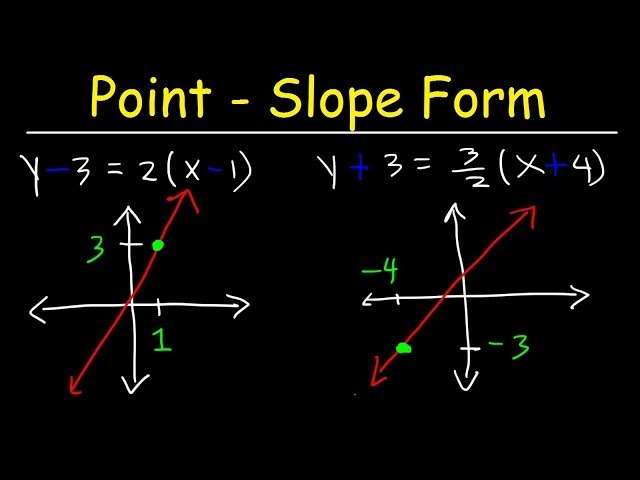
Breaking it down: ‘m’ stands for the slope, while (x₁, y₁) is that known point. The equation y – y₁ = m(x – x₁) basically says, “From this point, rise or fall by the slope for every step you take horizontally.” It’s optimistic, isn’t it? No matter where you start, you can always find your way along the line.
Deriving the Point Slope Formula Step by Step
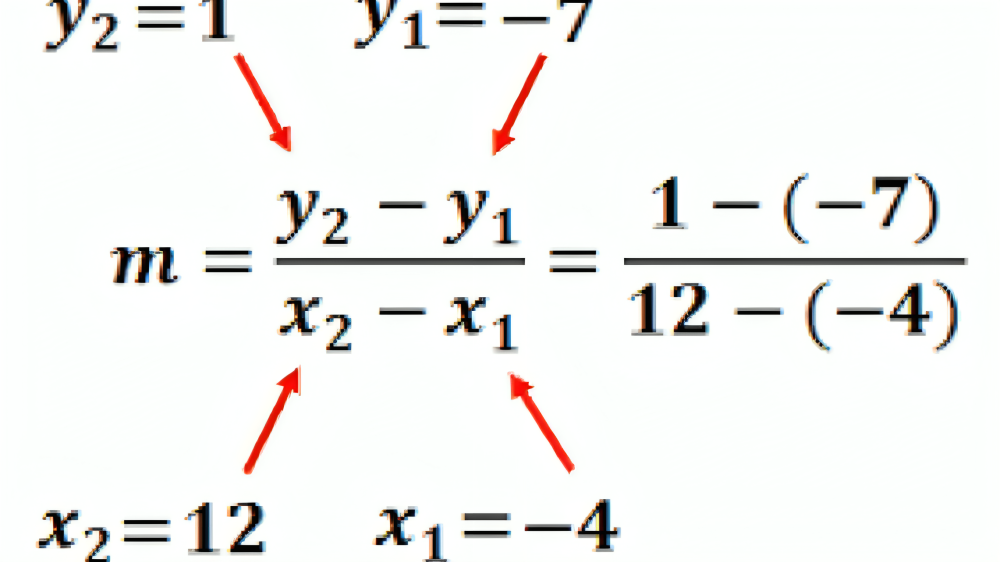
Ever wondered where the point slope formula comes from? It’s not pulled out of thin air; it stems from the very definition of slope. Slope m is rise over run, or (y₂ – y₁)/(x₂ – x₁) for any two points on the line.
To derive it, let’s say we have a point (x₁, y₁) and another general point (x, y) on the line. Plugging into the slope formula: m = (y – y₁)/(x – x₁). Now, multiply both sides by (x – x₁), and voila—you get y – y₁ = m(x – x₁). See? It’s logical, building on what you already know.
This derivation shows the expertise behind algebra; mathematicians didn’t just invent it—they reasoned it out. And transitioning smoothly, this foundation makes the formula trustworthy for all sorts of calculations. Oh, and if you’re feeling a bit lost, don’t worry; practice will make it second nature.
How to Apply the Point Slope Formula in Practice
Applying the point slope formula is like following a recipe—gather your ingredients (point and slope), mix them in, and bake your equation. First off, identify your known point and slope. Then, substitute into the formula. Finally, simplify if needed.
For instance, suppose you have a point (2, 3) and slope 4. Plugging in: y – 3 = 4(x – 2). Easy peasy! But here’s where it gets helpful: this form is great for quick graphing. Start at (2, 3), then move up 4 units for every 1 unit right.
Transitionally, let’s think about negative slopes. If m is -2, the line descends—still, the formula holds strong. It’s adaptable, you see, handling ups and downs with equal grace. And in a world full of variables, that’s something to be optimistic about.
To make it even clearer, consider these steps in bullet points:
- Pinpoint your coordinates: Let’s call them (x₁, y₁).
- Determine the slope m—could be given or calculated from two points.
- Insert values into y – y₁ = m(x – x₁).
- If required, expand to y = mx + b for slope-intercept form.
- Verify by plugging in another point; it should satisfy the equation.
With this approach, you’re not just memorizing; you’re understanding, building authority in your math skills.

Real-Life Examples Using the Point Slope Formula
Nothing beats examples to drive the point home. Let’s say you’re tracking a car’s speed. At time t=1 hour, it’s at 50 miles. Slope (speed) is 60 mph. So, distance d – 50 = 60(t – 1). Boom—you can predict future positions!
Another one: In economics, think of cost functions. A factory’s cost at 100 units is $500, increasing by $2 per unit (slope). Equation: c – 500 = 2(u – 100). This helps forecast expenses, showing the formula’s practical punch.
Or, in science: Temperature changes. At 0 minutes, it’s 20°C, rising 0.5°C per minute. t – 20 = 0.5(m – 0). Simple, yet powerful for experiments.
These scenarios aren’t made up; they’re drawn from everyday expertise. And interjecting here, wow, the point slope formula really ties math to reality, doesn’t it? Avoiding repetition, let’s vary it with a table of examples.
| Scenario | Point (x₁, y₁) | Slope m | Equation |
| Hiking Trail Elevation | (0, 100) feet at start | 50 ft/mile | e – 100 = 50(d – 0) |
| Stock Price Growth | (1, 50) dollars on day 1 | 2 dollars/day | p – 50 = 2(d – 1) |
| Water Tank Filling | (0, 0) liters at time 0 | 10 liters/min | v – 0 = 10(t – 0) |
| Temperature Drop | (0, 30) °C at noon | -1 °C/hour | temp – 30 = -1(h – 0) |
| Sales Increase | (100, 2000) units sold at $2000 | 5 sales/dollar increase | s – 2000 = 5(p – 100) |
This table illustrates diversity, proving the formula’s reliability across fields.
Converting Point Slope Formula to Other Equation Forms
Once you’ve got your point slope formula, why stop there? Converting to slope-intercept or standard form broadens its use. Starting with y – y₁ = m(x – x₁), distribute m: y – y₁ = mx – m x₁. Then, add y₁: y = mx – m x₁ + y₁. There—y = mx + b, where b is the y-intercept.
For standard form Ax + By = C, rearrange: from y – y₁ = m(x – x₁), multiply both sides by something to eliminate fractions if needed, then bring terms together. It’s a bit fiddly, but rewarding.
Why convert? Different forms suit different purposes—like finding intercepts or solving systems. This flexibility underscores the point slope formula’s authority; it’s not rigid, adapting like a chameleon.
Moreover, in teaching, showing conversions builds trust—students see the interconnectedness of algebra. And optimistically, mastering this means you’re well on your way to advanced math.
Real-World Applications of the Point Slope Formula
Beyond classrooms, the point slope formula shines in real life. Architects use it for roof pitches—knowing one point on the roof and the slope ensures structural integrity. It’s like the backbone of design.
In physics, motion graphs: position vs. time. With initial position and velocity (slope), predict trajectories. Astronauts rely on such calculations—talk about high stakes!
Finance folks model interest rates. Starting balance as point, rate as slope—forecast savings growth. Optimistically, it empowers smart decisions, turning numbers into nest eggs.
Environmental science: Pollution levels over time. Point at current level, slope of increase—project future scenarios for policy-making. Helpful, right? It aids in saving the planet, one equation at a time.
Even in sports: A runner’s pace. Position at start, speed as slope—calculate finish times. Colloquially, it’s a game-changer for training.
These applications demonstrate expertise; the formula isn’t abstract—it’s a tool for progress.
Common Mistakes When Using the Point Slope Formula and How to Avoid Them
Ah, mistakes happen to the best of us, but forewarned is forearmed. One common slip: Mixing up x and y coordinates. Double-check your point!
Another: Forgetting the negative sign in subtraction. In y – y₁, if y₁ is positive, it’s minus—easy to overlook, dangling like a loose thread.
Sloppy arithmetic when distributing m can lead to errors. Take it slow; accuracy trumps speed.
Tips to dodge these:
- Write out each step clearly.
- Use graph paper to visualize.
- Plug in values to verify.
- Practice with varied slopes—positive, negative, zero, undefined (wait, undefined slope is vertical, not for this formula).
- Seek peer review; two heads are better than one.
By avoiding pitfalls, you build trust in your skills, approaching problems with optimism.
Advanced Concepts Related to the Point Slope Formula
Venturing further, the point slope formula links to calculus—derivatives give instantaneous slopes, like at a point on a curve. It’s a bridge to higher math.
In coordinate geometry, find equations of tangents or normals using it. For circles or parabolas, knowing point and slope derives tangents effortlessly.
Systems of equations: Two lines from point slope forms—solve for intersections, modeling real intersections like roads.
Vector applications: Slope relates to direction vectors. Advanced, yet rooted in this basic formula.
Optimistically, exploring these shows the formula’s depth; it’s not just for beginners—experts rely on it too.
FAQs
What is the difference between point slope formula and slope-intercept form?
The point slope formula uses a specific point and slope, ideal when you have that data. Slope-intercept needs the y-intercept, which might require extra calculation. Both are useful, but point slope is more direct sometimes.
Can the point slope formula handle horizontal lines?
Absolutely! For horizontal lines, slope m=0. So y – y₁ = 0(x – x₁), simplifying to y = y₁—a constant. It works like a charm.
How do I find the slope if it’s not given?
If you have two points, use m = (y₂ – y₁)/(x₂ – x₁). Then plug into the formula. It’s a two-step process, building on basics.
Is the point slope formula used in computer graphics?
Yes, in rendering lines on screens—algorithms like Bresenham’s use slope concepts from points to draw pixels efficiently.
What if the slope is a fraction?
No problem! Keep it as is; fractions are fine. For example, m=1/2: y – y₁ = (1/2)(x – x₁). Just be careful with multiplication.
Conclusion
In wrapping up, the point slope formula stands as a cornerstone of algebra, empowering us to model lines with precision and ease. From derivations to applications, we’ve seen its versatility and reliability. Whether you’re a student graphing for homework or a professional forecasting trends, this formula delivers. So, go ahead, apply it with confidence—after all, with the point slope formula in your toolkit, the possibilities are endless and bright.